
Iroquois County Projected Release Dates
A projected date is a calculation made before release. It helps describe what may happen if the sentence, credit, conduct, and custody facts remain unchanged. An actual date records an event that already happened. Confusing the two can lead to a false claim that someone left custody when the public record only displayed an estimate.
IDOC uses distinct fields for different milestones. PROJ MSR DATE anticipates movement from prison into mandatory supervised release. PROJ DISC DATE anticipates completion of the broader sentence and supervision structure. MSR is supervised release after prison. Discharge is the later end of the sentence or supervision obligation.
| Record | What it can establish | What it cannot establish alone |
|---|---|---|
| Projected MSR date | Expected move from prison to supervision | That the person actually left |
| Projected discharge date | Expected end of the sentence structure | That all duties have ended |
| Sheriff release log | County-jail exit time and type | That no receiver took custody |
| Release notice | An accomplished IDOC event | Later custody or violation |
Find an Iroquois County Projection
Use the system that held the person. IDOC does not calculate release for someone who never entered state custody. The Iroquois County jail cannot certify an IDOC prison projection. Identity checks are just as important as date checks because similar names and old profiles can point to the wrong sentence.
- Determine whether the person is in Iroquois County Jail, IDOC custody, or another system. Read the court docket for a transfer or commitment order.
- For state custody, open the direct IDOC search application. Search by IDOC number when possible, or use last name and birth date.
- Match the photograph, full identity, IDOC number, committing county, and offense. Save the access date because fields can change.
- Read status, location, projected MSR, and projected discharge together. Do not substitute the special early-release results page for the main profile.
- For a county sentence, obtain the written judgment, jail-credit entry, and any later court modification. Ask the jail to confirm the actual timestamp.
- If the date is disputed, request the calculation sheet, credit actions, notification of release date, release checklist, warrants, and detainers from the correct custodian.
The broader Iroquois County released inmate search helps distinguish a county exit from a transfer into state, federal, or immigration custody.
The official IDOC application shows the available search route.
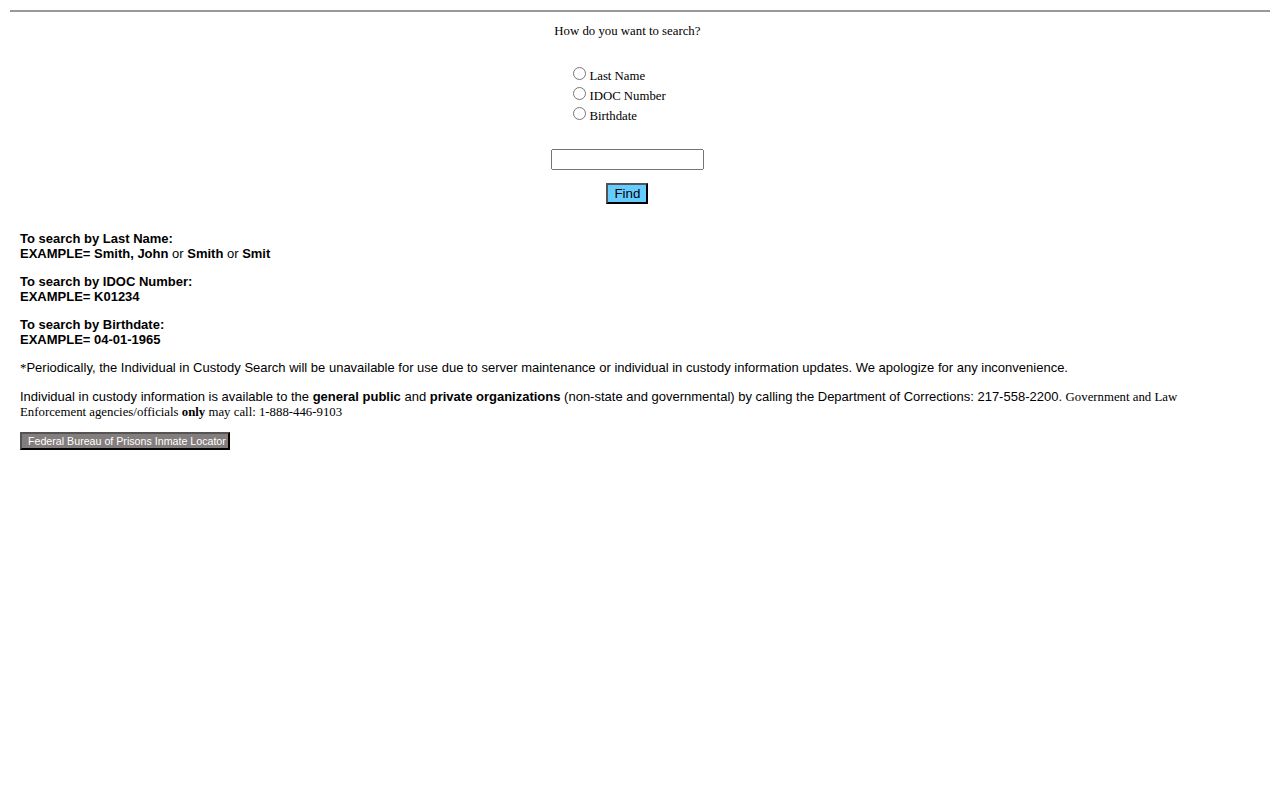
The captured search screen is an entry point. The resulting profile must still be matched carefully and read as a state corrections record.
Iroquois County Sentence Credit
Illinois sentence calculation starts with the judgment. IDOC aggregates consecutive terms, applies presentence custody credit, accounts for concurrent terms, and uses the credit rule tied to the offense and its effective date. It also records lost time and later credit revocation or restoration. The MSR term is then part of the full sentence structure.
730 ILCS 5/3-6-3 governs major sentence-credit rules. Many eligible determinate prisoners receive one day of statutory credit per day served. Specified offenses have stricter limits. The common “85 percent” shorthand reflects one category that allows no more than 4.5 days of credit per month. Other provisions can require 75 percent or 100 percent service. Neither “everyone serves half” nor “every serious offense is 85 percent” is reliable.
Earned Sentence Credit is discretionary, not automatic. IDOC says initial consideration generally requires more than 60 days in its custody and no exclusion under the statute. Assessments, the offense, relevant history, conduct, discipline, programming, and required treatment can matter. Eligibility does not create a right to an award.
The IDOC earned-credit explanation says an awarded adjustment that changes a projected parole date will appear on the online profile.
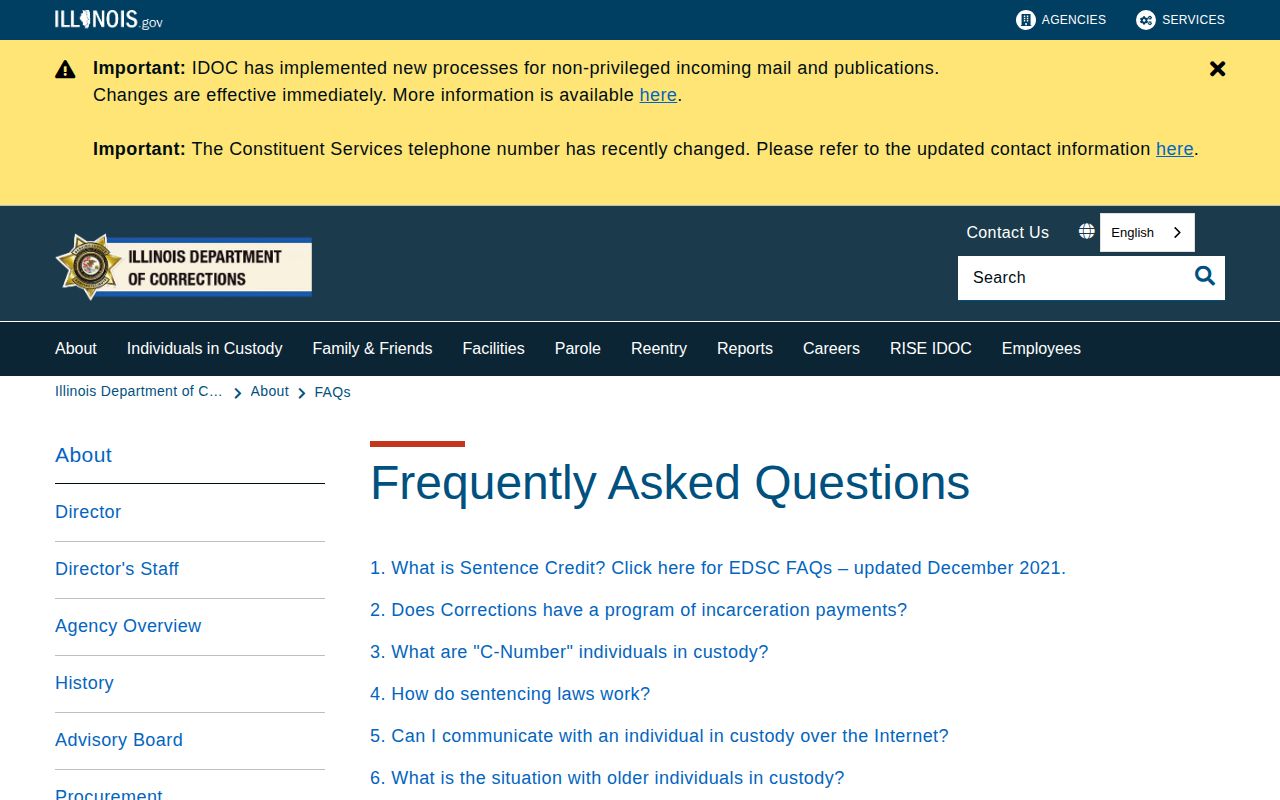
This state explanation supplies general rules. The person's calculation sheet remains stronger evidence of credits actually applied.
Why Iroquois County Dates Change
A projection changes when one of its inputs changes. Some updates shorten the expected term, while others extend it or prevent the expected transition. A date that has passed without a status change calls for more checking, not an assumption that the public profile is wrong or that release secretly occurred.
| Factor | Possible effect | Record to check |
|---|---|---|
| Corrected jail credit | Moves the calculation | Judgment, mittimus, calculation sheet |
| Earned credit | May advance a projection | IDOC award and updated profile |
| Credit revocation or restoration | Moves the date later or earlier | Disciplinary and credit records |
| Amended sentence | Changes the term or structure | Filed court order |
| Concurrent or consecutive correction | Changes aggregate time | Judgment and calculation sheet |
| Warrant or detainer | May prevent community release | Warrant and receiving-agency record |
| Release-plan issue | May delay processing | IDOC release packet |
A detainer is a request or notice that another authority may take custody. It can turn an apparent release into a transfer. Escape, absence, new cases, discipline, or an overturned sentence can also alter the timeline.
For modern determinate cases, PRB usually does not grant the initial release. IDOC calculates it. Legacy indeterminate parole and some special release mechanisms follow different procedures, so a PRB hearing can matter in those narrower cases.
County Jail Release Calculations
An Iroquois County Jail sentence is not calculated through the public IDOC projected-date field. Begin with the signed local judgment, the number of jail-credit days, any applicable county-jail good-behavior provision, and later court modifications. Bond, dismissal, and pretrial release are legal events, not forms of good time.
A pretrial detainee often has no scheduled exit. The court may enter a release order, yet the Sheriff log is still needed for the physical departure. Another hold can prevent a community exit. Ask whether custody passed to IDOC, another jail, federal authorities, a hospital, or another receiver.
The Iroquois County Circuit Clerk record explains legal authority. The Sheriff confirms the actual date and time. When those records conflict, preserve the words and timestamps from each source rather than forcing one date to serve both jobs.
Note: IDOC's projection should never be applied to a person whose case remained solely in county custody.
Iroquois Projected Release Fields
Iroquois County state-prison cases have a useful Illinois-specific wrinkle. IDOC Directive 01.07.808 identifies both projected MSR and projected discharge. The first concerns the expected prison-to-supervision transition. The second concerns expected completion of the sentence and supervision framework. One date may therefore arrive long before the other.
The records behind those fields include sentence-calculation sheets, credit revocation and restoration papers, parole agreements, violation reports, release checklists, notification of release date, PRB notices, warrants, detainers, and release packets. A narrow IDOC records request can name those documents when a profile is unclear.
The special IDOC early-release notification search is limited. It covers qualifying statutory early-credit releases, may post information shortly after release, and can retain it through a defined period. Absence from that tool says nothing about an ordinary state release.
The official early-release source illustrates its narrower scope.
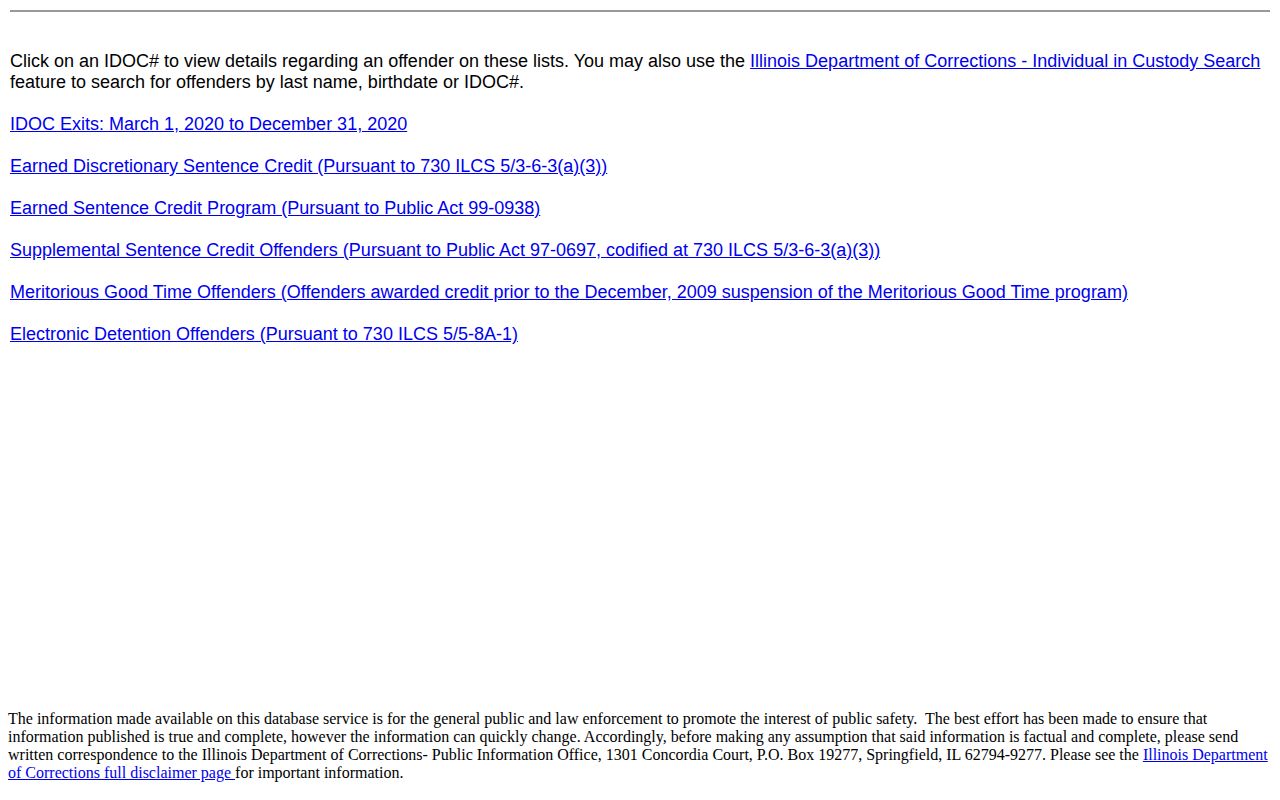
Use the main IDOC profile and underlying records for a complete individual calculation, not this special list alone.
Confirm Iroquois County Release
Confirmation should follow the event. For an IDOC prisoner, compare the latest status with the notification of release date and release checklist. For a county prisoner, call Iroquois County Jail and request the exit date, time, authority, type, and receiver. For either, a court order may explain why the event was authorized but may not show the exact door time.
Illinois VINE may send a release, transfer, escape, or custody-change notice when the relevant agency participates. A transfer alert is not a community release. Use the VINELink Check to register for a future alert, then confirm the event with the reporting agency.
If a projected MSR date has passed, ask about credit changes, detainers, warrants, sentence amendments, release-plan issues, or a later custody event. Record the source, exact wording, identifier, timestamp, and access date. That creates a sound timeline without turning an estimate into a fact.
Iroquois County Calculation Records
When a profile remains unclear, a focused IDOC request should identify the person by IDOC number and seek the sentence-calculation sheet, notification of release date, release checklist or packet, status-change record, final-discharge material, and credit actions. These documents answer different parts of the question, so one should not be treated as a substitute for all the others.
The calculation sheet shows how the Department applied the judgment, custody credit, term structure, and earned or revoked credit. A later status-change record can show that release to MSR or discharge occurred. A warrant or detainer in the master file may explain why the expected community transition did not happen.
The IDOC Release Procedures Directive shows that processing may involve identity review, notices, supervision arrangements, property, transport, and an approved plan. Those steps do not rewrite the sentence, but they affect how the transition occurs. The strongest answer combines the legal term, the Department's calculation, and the completed event record.
Public Record Search
Sponsored Results